courtesy of: The Morning News
by Rosalie Klein
A number of island galleries and museums in and around Oranjestad presented a concerted front of culture and history during the Betico Day celebration on Wednesday, January 25. From 10:00 AM until 2:00 PM, the National Archeological Museum, Historic Museum at Fort Zoutman, UNOCA gallery, Ateliers ’89 Gallery and Art Education Center and StudiO opened their doors to visitors without fee.
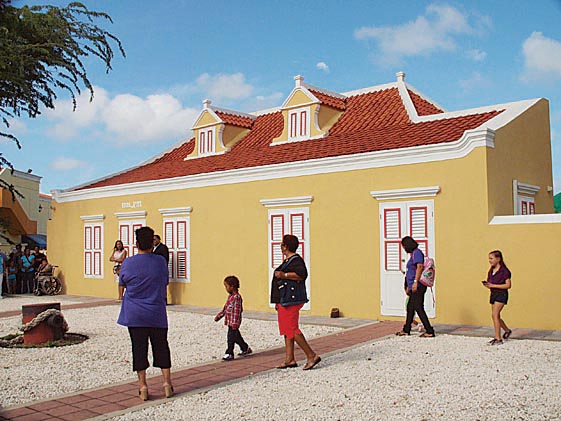
The day of free expositions began with the “soft” opening of the new center for the Rancho exhibit, which was formally on loan to the National Archeological Museum. The landmark building in which it is located, just behind the Oranjestad Bus Terminal, was the former Eman home, founders of Aruba’s first bank, centuries ago.
It is situated in Rancho, and the influence this historic area had on the island, plus some of the dynamic personalities who crafted the community that existed there, are depicted in the various exhibits.
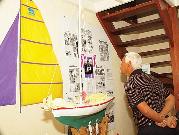
A new edition to the exposition is homage to Rudolfo Santiago, a champion of a favorite island pastime of Rancho, mini-sailboats. Regina Croes, President of Aruba Mini Sail Foundation and Robert Moons, President of the Sunfish Club Aruba, were present for the unveiling of this new portion of the exhibit.
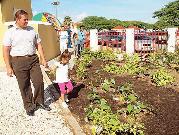
On this festive day, a number of other island organizations were present, including the Santa Rosa Center, which did the landscaping of the gardens; they are actually edible herbs which are regularly used by islanders, and are identified by species.
Rancho was a center for sailing, fishing, and aloe production in former centuries. It used to be shore front, until Oranjestad harbor was dredged and several square kilometers of new land were created in the middle of the 20th century. People came from all over the island to buy their fish and the harbor was cluttered with small wooden boats, from which many of the Rancho residents eked out a living. It was also home to some natural salt ponds which the fishermen used to preserve their catch, as well as housing Aruba’s slaughterhouse in the area that is now the parking lot behind the bus station. It is teeming with island history and culture, and on its streets, many colonial homes can be seen, quite a few occupied by descendents of the original inhabitants.