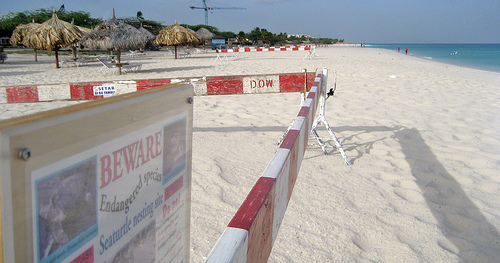
 courtesy of: Aruba-Daily News
Mother Nature is a busy lady on Aruba these days, overseeing more than 70 nests this season. All sea turtles are endangered worldwide, and Aruba’s shores have become a favorite nesting place for the Leatherback, Hawksbill, Green, and Loggerhead species. Visitors to our island can witness both the laying and hatching of eggs all along our west coast, particularly in the low-rise hotel area along Eagle Beach. This year, Palm Beach also welcomed a few nests, which has not been common the past few years.
Nesting season runs March through September, with hatching occurring May through November. Volunteers from our local organization, TurtugAruba, devote many hours to educating the community, as well as watching over and protecting the nests during the season. Here are a few tips they share to protect our sea turtles:
Lights Out for Turtles
Nighttime activities and artificial lighting may deter adult females from nesting or disorient emerging hatchlings, leading them inland where they die of dehydration or are crushed by cars. So PLEASE keep all lights off, including flashlights, flash photography and video equipment.
Do Not Drive or Litter on Beaches
Vehicles compact sand and make it difficult for turtles to dig into or out the sand. Balloons, plastic bags, and other non-degradable litter can kill sea turtles that mistake it for food.
Remove Obstacles From the Beach
Obstacles such as beach furniture or recreational equipment may cause nesting females to abort their nesting attempt or may even trap nesting females or hatchlings.
Nesting Females and Hatchlings
Watch a nesting turtle from a distance. Turtles are very shy and will easily leave without nesting. Leave hatchlings in their nest; they will exit the nest when they are ready. Let them crawl to the water on their own, allowing them to imprint on their home beach.