courtesy of: Aruba-Daily News
Agriculture, fisheries and forestry have provided for centuries the main source of livelihood for the populations of small island destinations. From the tourists’ point of view, eating food that is produced relatively proximate to a diner’s geographic location may not seem like an innovative act, but because of changes to food production over the past century, it is becoming more difficult to find.
Considering that food represents approximately one-third of all tourist expenditures, the levels of continued imports from regional entities greatly affect the economic impacts of tourism caused by large leakages. This is especially the case for most small island destinations when the hospitality and tourism industries rely on imported foods. The consumption of locally produced foods, therefore, represents a unique opportunity for consumers to contribute to the increase of the linkage between tourism and agriculture, therefore enhancing food sustainability.
Restaurants purchasing locally produced foods can influence tourists’ eating behaviors while promoting the island’s local cuisine and food ingredients. This in turn can also enhance the overall gastronomic experience of tourists, and complement to the traditional tourism portfolio of small island destinations.
The availability of foods in a destination and locals’ eating and drinking habits is considered as an attraction, which is regarded as an important pull factor for tourists in making their travel decisions. The above-mentioned developments in the tourism industry clearly indicate a potential demand for locally produced foods, enhancing the synthesis between tourism and agriculture.
According to the United States Department of Agriculture (USDA), locally grown food now represents a $4.8 billion business, and an increasing number of hotel chains and restaurants worldwide are eager to offer menus showcasing sustainable local food items produced by local farmers for environmentally conscious and health conscious customers. In the U.S. for example, Blue on Blue, a poolside restaurant at the Avalon Hotel in Beverly Hills, celebrates Earth Day with menus showcasing organic food.
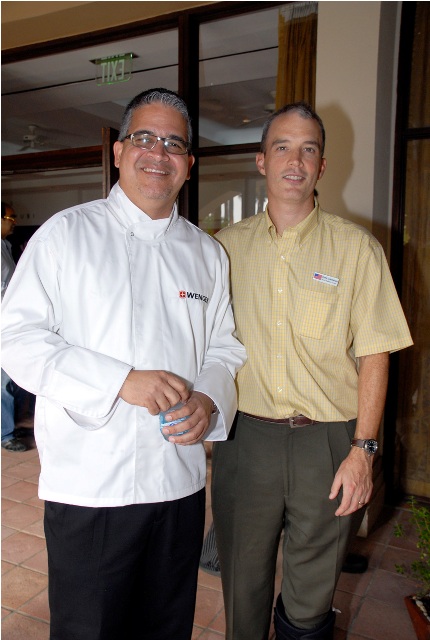
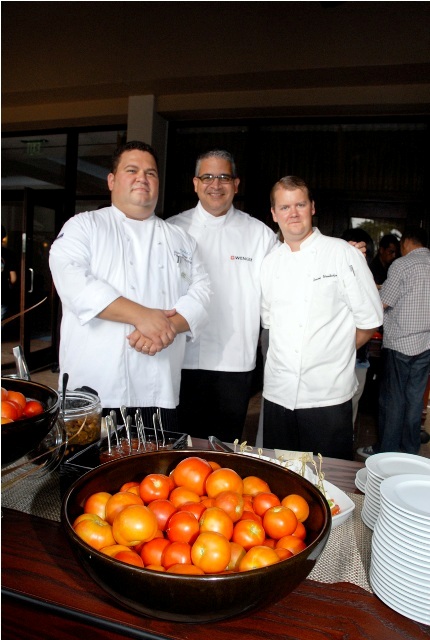
In Aruba, Mr. Gerald (Gino) Kock, a graduate of the Culinary Institute of America in Hyde Park, New York, and now a doctoral student and part-time faculty member at the University of Aruba’s Faculty of Hospitality and Tourism Management Studies, took the initiative to approach hotels and restaurants to join him on the bandwagon to have them also contribute in enhancing the linkage between agriculture and tourism. His initiative is part of a doctoral dissertation where he’s conducting a study in Aruba, measuring the strength of the linkage between local farmers, restaurants and the tourists.
On the other hand, Hyatt Regency Aruba, under the leadership of its current Director of Food and Beverage, Mr. Drew Carnahan, has agreed to commit to help local farmers by purchasing the products they produce. This strategy is nothing new for Hyatt Hotels and Resorts, where many of their hotels pursue the usage of locally produced foods.
Their approach is based on their unique “Food, Thoughtfully Sourced, Carefully Served” program, which is their global philosophy focused on sourcing and providing food and beverage options that are good for Hyatt guests and associates, good for the planet, and good for local communities.
According to Susan Santiago, Vice President of Food and Beverage, and previously General Manager of the Hyatt Regency Aruba, one of the key pillars of this program is focused on a health planet by implementing sustainable practices that will improve the long-term health of people and the planet. However, more directly to this event, this program is intended to support healthy communities by sourcing from local suppliers as well as sharing knowledge and actively supporting farmers, farmers’ markets and other community events.
Aruban grown cucumber, tomatoes, bell peppers and mushrooms are just a few to mention that are being used by the prestigious Hyatt kitchens in Aruba. To put their hands on our locally grown foods, Hyatt Regency has their own little herb garden as well, where they grow their own parsley, cilantro and other exotic herbs and spices. Management at the Hyatt Regency Aruba is very interested in purchasing more local produce, seafood, and beverages as they become available in the marketplace.
Another example of a Hyatt hotel in the region that pursues the interest in locally produced foods, includes Hyatt Regency Trinidad, where their executive chef, Fernando Franco – a graduate of the Culinary Institute of America as well – is also committed to use locally grown and organic foods. This ‘farm to table’ approach is evident in each one of his courses.
This illustrates that both the University of Aruba and The Hyatt Regency Aruba are also committed to promoting the usage of locally produced foods, therefore helping local farmers, the local economy, and also the environment. Knowledge about preparation and consumption of locally produced foods remains a part of the existence and identity of a community, and that is the commitment of both the University of Aruba and its industry partners.