 The plaza in downtown Oranjestad fronting the new Museo Arqueologico Nacional Aruba, MANA, was filled beyond capacity with those who came to celebrate that grand opening of what is the most advanced museum of its kind in the Caribbean. They were treated to an evening of spectacle which examined cultural and historic influence on the region in a very entertaining and informative fashion.
Pomp and Grandeur was emphasized by the presence of H.R. H Princess Margriet and her husband Prof. Mr. Pieter Van Villenhoven, who were special guests along with the Aruba’s Governor Fredis Refunjol, and Frits Goedgedrag, Governor of the Netherlands Antilles, Aruba Prime Minister, Nelson O. Oduber and Prime Minister of the Netherlands Antilles, Emily de Jongh-Elhage, along with dozens of regional Dutch dignitaries. They were welcomed to the plaza with a performance of typical Aruban carnival music from the group Le Groove, and following words of welcome from Minister of finance, Nilo Swaen and the evening’s master of ceremonies, Edwin Abath. A preshow by Taki Mohammed presented a mix of regional culture, past and present.
H.R.H Princess Margriet and her husband were invited to assist Francisco Croes, a pioneer of archeological digs and study on Aruba in the official opening act. “Fan,” as he is know for his to the archeological staff headed by Reymundo Dijkhoff, had a natural interest and talent researching Aruba prehistoric past and for more than 20 years has participated and encouraged the collection and documentation of artifacts.
Along with archaeologist Ramon Dacal of Cuba, he documented a described the famous Tanki Flip dig in 1994, resulting in a more compete knowledge of the Amerindian population of Aruba; his example inspired a new generation of Aruban archeologists.
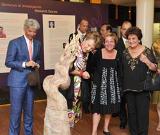
 Assisted by Arminda Franken-Ruiz, MANA head Curator and Aruba’s Minister of Labor, culture and sports, Ramon Lee, H.R.H princess Margriet and her prof. mr. van Vollenhoven retried the remote control contained in the ancient pot held by Fran Croes, which set alight the museum’s new logo, set high above the building and the dramatically framed by the night sky. The new logos is inspired by a top-view of the ceramics ceremonial vessel recovered from the Tanki Flip dig, combined with other ceramics found in the museum, the most prolife type of the artifacts housed in a new facility.
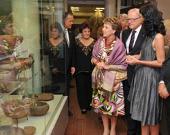
Princess Margriet, Governor Refunjol, and other noted dignitaries were invited for a private tour of the museum before it was opened to the general public. During that time an elaborate production featuring the talents of Jackie Bernabela from Bonaire, Roy Colastica, Pricilla Maria and Roly Kelkboom from Curacao and Urmain Dormoy of St. Maarten, along with Alydia Wever of Aruba was presented. This was a joint Aruban/Dutch production under the direction of Takai Mohammed and Aike Dirkzwager of Holland.
MANA was funded by the European Development Fund, the ministries of Culture and Finance, UNOCA, CEDE Aruba, Prins Bernhard Cultuurfonds of the Netherlands Antilles and Aruba and a cooperative culture fund of the Netherlands Antilles and Aruba.
The museum complex offers an authentic glimpse into 5000 years of regional history, with entertaining and inactive displays.
 A project that took more than 10 years to be realized, visitors are initially welcomed into the historic Ecury complex of classic colonial type building which were restored, and a modern state – of – the art section to house the ancient artifacts. The complex also includes a research center for serious study and a cafeteria.
During this address, Minister Swean stated” the museum will bring a strong emphasis of Aruban culture to the everyday lives of the island residents, and make the experience of tourists more profound.” To celebrate their opening week and demonstrate the many ways the museum can do this, the staff members are conducting daily special activities to acquaint islanders and visitors with the new museum and its many amenities.
In particular the first temporary exhibition, titled “Rancho,” will be in the limelight. Aruba’s traditional fisherman’s quarters, o the west side outskirts of Oranjestad and where the museum is located, is the subject of the detailed study by historian Kees de Jonge.
Various interactive events geared to all ages will be featured throughout the week. For more information regarding their daily programs contact the museum at telephone number 582-8989 or via e-mail:acrcheoadm@hotmail.com or archeo@setarnet.aw