courtesy of: The Morning News
by Rosalie Klein
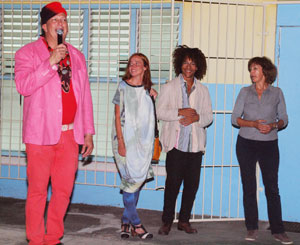
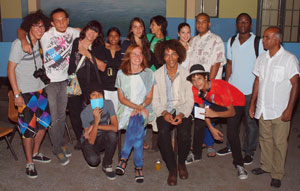
 Ateliers ’89, the Aruban foundation and center for art and cultural education, is hosting a 2-month exposition of the works produced by their most recent classes in Raku pottery and Video, titled “Capturing Modern Hieroglyphs.” The Raku course was taught by guest instructor Ellen Spijkstra, originally from Holland but a resident of Curacao since 1980, and the video course featured Erla Haraldsdóttir and Craniv Boyd, from Berlin, Germany as instructors, who also work extensively in Erla’s nation of birth, Iceland. Craniv is a Liberian/American born and raised in Brooklyn, N.Y.
The title refers to the concept of distant future societies looking upon the artwork produced today as this culture looks at the hieroglyphics of ancient cultures, trying to understand their mentality and social structure. (One can’t help wondering what they will conclude by watching the Jackass TV series or films.)
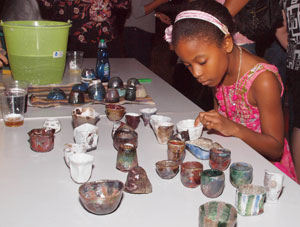
The main exposition room features Raku, a unique pottery favored for use during the ritualistic Japanese tea ceremony and named for Jurakudai, a palace in Kyoto.. In the 16th century, Sen Rikyu, the Japanese tea master, was involved with the construction of the Jurakudai and had a tile-maker named Chojiro produce hand-molded tea bowls for use in the wabi-styled tea ceremony that was Rikyu's ideal. The resulting tea bowls made were initially referred to as "ima-yaki" ("contemporary ware") and were also distinguished as Juraku-yaki, from the red clay employed in their manufacture. Hideyoshi presented Jokei, Chojiro's son, with a seal that bore the Chinese character for Raku, which then became the name of the family that produced the wares. Both the name and the ceramic style have been passed down and stayed within the family (sometimes by adoption) to the present 15th generation. The name and the style of ware have become influential in both Japanese culture and literature. Modifications and new techniques have been introduced by contemporary artists around the world who became fascinated with this special process.
A graphic demonstration of the unique baking and glazing procedure was performed on the opening night. This included a pleasant sampling of how this pottery can affect the flavor of the beverage it contains with free samples of Saki in special Raku cups made by the class, complements of Aruba Trading Company.
The video class was assigned the task of remaking and re-interpreting an iconic piece from film, theater or literature, which they could produce within the limitations of the Aruban environment and their small class of 12 making up the production company. Final projects included scenes from “Eclipse” the Twilight series, “Casper the Friendly Ghost”, and a remake of the opening credits from the 70’s TV show “Hawaii Five-O” renamed “Aruba Five-0.”
The results of both classes are a most fascination exposition contrasting ancient and modern arts, and showcasing the individual creativity of the students and instructors.
The exposition is open to the public, gratis, Monday through Friday from 11:00 AM until 5:00 on the grounds of Ateliers ’89, in Oranjestad at Dominicanessenstraat 34, Aruba. Across from Maria College; call 588-5776 or 565-4613 to arrange a tour and get directions.