 Courtesy of : The Morning News
Chief Archaeologists of the National Archaeological Museum Aruba, NAMA, welcomed media to his team’s workshops for additional revelations about the Santa Cruz dig, which is providing a wealth of information.
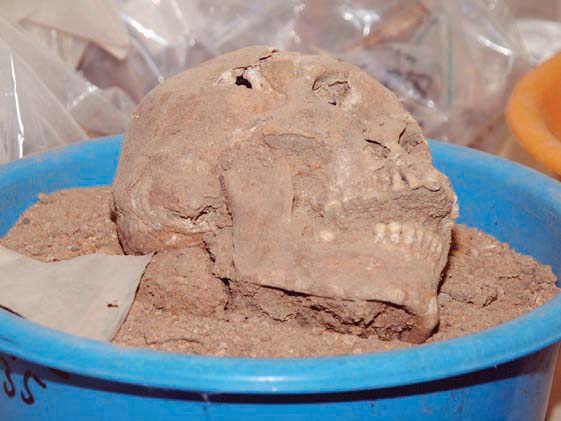
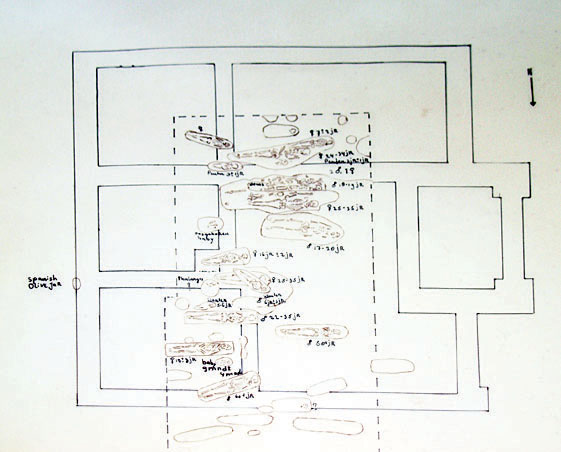
The unmarked burial site was discovered by accident when property owners began bulldozing to build a parking lot in 2001. To date it has 36 graves without any sort of marker or tombstone of any kind. 18 have been excavated and their remains are now at the NAMA labs. Both male and female remains have been found, from what they estimate to be a 9 month old infant to elderly.
The dig site presented a true puzzle, as graves indicated a mix of burial techniques, from Christian burial to Amerindian traditions, complete with grave gifts. One particularly interesting find was a gold ring inset with nine emeralds, which is now on display in the museum. All remains found were Amerindian, of two types, The Caquetio of the Ceramic Period 900/1000-1515 A.D and a colonial period from 1515 to 1880 A.D. The site appears to have been used as a graveyard during two periods in the island history, one layered over the other.
The earlier period particularly creates something of a mystery, as according to island historians, settlements east of the Hooiberg were forbidden. The land was reserved as grazing areas for cattle and there is no record of nearby settlements. Such a collection of graves would indicate the existence of a house of worship adjacent.
Raymundo Dijkhoff speculates the mixture of burial techniques and artifacts found would indicate internment at the time when missionaries were just beginning to convert the aboriginal population to Christianity. Though having converted, the Amerindians still observed some of their older native traditions during the burial practice. The adoption of the new faith was not yet fully integrated into the native society.
Other artifacts found, including Spanish Reales, glass and metal earrings, and several nails assist in pinpointing the era of this grave site. The orientation of the bodies at burial, with the head at the western side, is a Catholic technique. Combined with artifacts found which indicate there was a large central support post, this contributes to speculation that the site may have been adjacent to what would be the oldest church on Aruba, dating around 1515-1625 AD.
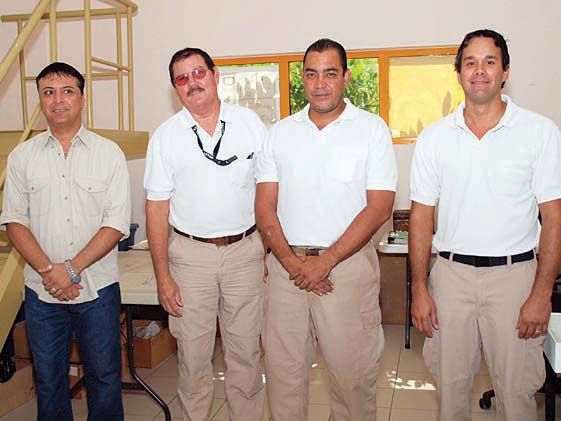
Work on the remains continues as the museum moves on to the next phase and excavation of more graves. The archaeological team of Harold Kelly, Hiram Angela and Francisco Croes, along with Chief Archeologist Raymundo Dijkhoff are quite convinced the site is far more extensive than what is now revealed. 60 square meters has been cordoned off, but they are sure extending the site will reveal more graves and artifacts. The team will keep the public informed of interesting findings, and hope to present a paper at the next congress of the International Association for Caribbean Archaeology, (IACA), which will be conducted in Puerto Rico in July, 2013.